Fallen Dragon – Peter F. Hamilton

This novel is about a young man whose illusions are shattered in a cruel society. He runs away from home to become a mercenary. The story jumps back and forth between his youth and his part in plundering a colony world during his career as a corporate soldier. He is sick of the society he lives in, and gets that rarest of things, a second chance.

There is much else going on too, including a legacy left by ancient spieces, and Hamilton’s views on what to do with societal immortality. Although I felt it to be awesome in the scope of the macrostory, the main characters are easily within our reach, and the unexpected ending may well bring tears of joy to your eyes.

The Greg Mandel Series – Peter F. Hamilton

Consisting of:

  • Mindstar Rising
  • A Quantum Murder
  • The Nano Flower

These three loosely connected novels share the same protagonist, Greg Mandel. He is a psychic former soldier who now works as a sort of private investigator/mercenary. Greg comes into contact with a billionaire named Julia Evans, a very interesting characted in herself.

Although they can be read as straightforward SciFi crime novels, there is much more depth here. The location, a post ecodisaster England recovering from climate change is a fascinating place. Add to that a brave new kind of capitalism that has superseded rabid socialism, and the social commentary becomes top notch. Highly recommended.

The First Immortal – James L. Halperin

This story about how cryonics succeed follows a small group of people “through” cryogenic freezing to the society evolving in the aftermath of its success. The subject matter is very interesting and the book raises some fascinating questions. Unfortunately the writing itself is not particularly inspired.

The Bridge Trilogy – William Gibson

Consisting of:

  • Virtual Light
  • Idoru
  • All Tomorrow’s Parties

This series of three books is very loosely connected through some of the central characters. Although Gibson’s prose stands out as always, I felt that these novels were more an exercise in writing in a cool fashion than actual attemts at storytelling. The writing is even more florid and pared back than in the Sprawl Trilogy, and the books are not terribly interesting in their own right. It is Gibson, and worth reading, even though he has done much better.


In the Stormy Red Sky (RCN VII) – David Drake

The seventh book in the RCN series sees Leary take his new command, the heavy cruiser Milton, on what is supposed to be a milk run: escorting a senator to the Montserrat Stars to re-establish relations with the local authorities. Once they get there, it is clear that the Alliance has more or less taken over, having handed the Republic of Cinnabar Navy a humiliating defeat. IT should come as no surprise to regular readers that Leary and the rest must now fix the problem.

Lots of action and a strong story make for an entertaining book. The fact that Leary has now “graduated” to a larger ship, and spends some time in command of a makeshift squadron, is a definite plus. While tooling around in the Princess Cecile was all well and good, Drake couldn’t have Leary and Mundy do that forever. Speaking of Adele Mundy, this book is definitely very much about her, with significant developments for her character.

In Conquest Born – C.S. Friedman

Certainly impressive for a first novel, In Conquest Born details the struggle between Anzha and Zatar, prime representatives of their endlessly warring nations. The structure of the novel is unusual, as every chapter is somewhat like a short story in itself, often with different narrators, viewpoints and styles. The advantage is that exposition can be made from several angles. The disadvantage is a certain feeling of disjointedness as the device weakens the motivation to find out what happens next.

The narrative is epic with regards to time, space, and character development. The characterization is masterful indeed. Friedman goes on a deep dive into the conflicting cultures of the novel, especially the secretive Braxaná. This is, in fact, more a story of people than of technology. Few scenes have more than two or three characters, and we are treated to a well written exposé of the workings of the mind. It is very far from hard SF. While it could be called Space Opera, I would define it a psychological SF story.

Friedman proves that she can write a very complex novel without leaving the reader hopelessly confused. For that she definitely deserves credit. I enjoyed this odd semi-classic, despite the fact that it was a slog at times. At the end was the reward. The surprise ending made everything clear, tying up the many many tangents.

A Call to Arms – Alan Dean Foster

Book one of “The Damned”. A man is kidnapped by aliens, who are shocked to find that humans are so good at war and violence. All alien species are pretty useless at the stuff. Humans, though obviously and abomination and blablabla, will be a useful asset. Written with a great does of humor, but maybe I just didn’t get the joke. Yawn…

The Lost Regiment Series – William R. Forstchen

I have read the first three books in the series:

  • Rally Cry
  • Union Forever
  • Terrible Swift Sword

An American Civil War regiment gets transported to a world where a savage species comes around every few years and collects tribute in the form of human flesh. This series trods a well-worn path of military sci-fi (a prime example is Jerry Pournelle’s Janissaries), Fortschen does decently well. The first book is not bad, but by the time I got to the end of book three, I discovered that the story was not really going anywhere anymore. There is better stuff than this out there.

Mother of Demons – Eric Flint

This early Flint effort shows signs of his future greatness. Hidden behind the horrid cover and the rather simplistic few humans on a hostile world lie deep layers of meaning. A human colonization ship to another star has an accident. The only survivors to make it to the habitable planet are a few scientists and an historian, along with a host of young children. The natives are in the local Bronze Age. The story tells of how the historian must overcome her fears of the evil she knows the future will hold, and help lead her small band, and native allies.

There is great moral strength in the story. Flint is unfortunately a bit too enamored with the historical concepts he is exploring. He shows greater maturity in later works such as 1632, where he is more subte about the whole thing. That being said, Mother of Demons is a fun read full of Flint’s trademark humor.

The cover and the blurb both annoyed me. While the cover is a very accurate depiction of a key moment in the story, and the blurb does sum up the key players rather neatly, I think they probably scared away a large part of the potential readership.

Prisoner’s Hope – David Feintuch

I had run out of books during a holiday in the Greek islands and had to scurry to a second hand bookstore before I lost my sanity. I had seen the “Hope” books in bookstores before, and hoped (ahem) that the books would be more or less good copies of the Honor Harrington series by David Weber.

I gave up after a hundred and fifty pages or so. The main character is a total bastard, who takes offense at the smallest slight. The author seems to think that military command entails being a despotic father figure. There may have been a story. And don’t get me started on all the religious stuff. Steer clear of this one and go buy the Honor books instead.

The Hot Gate – John Ringo

The third book in the Troy Rising series picks up where Citadel left off. Dana Parker is transferred to the new Thermopylae station in order to stiffen up a screwed up squadron of Myrmidon assault shuttles mostly staffed by Latin American personnel. To say there is a culture clash is an understatement. Later, of course, the fecal matter hits the rotary air impeller in a big way as the Rangora decide it is time to deal with those pesky Terrans once and for all.

The cultural issues between Anglos and South Americans are dealt with humorously but with very serious undertones. Mr. Ringo has obviously spent a lot of time thinking about this. While it would be easy to think that he is just an American bashing what he perceives as an inferior culture, he is undeniable right about many aspects. For example the contrast between “honor” and “duty”, as well as the problems with a class society.

The way in which things go seriously pear-shaped at the end is vintage Ringo. Massive action. Massive losses. Heroics with that little bit of Ringo humor that just makes it so readable.

Engineer’s Mate Second Class Dana Parker (hang on, you say, wasn’t she a Coxswain’s Mate in the previous book?) is a perfect protagonist for this kind of book. A true hero.

This may be my favorite Ringo ever. The only niggling criticism is the lack of a dramatis personae. This is not much of a problem in the beginning, but lots of characters are suddenly introduced during the final action, leaving me occasionally confused as to who was who.

Orbiter – Warren Ellis & Colleen Doran

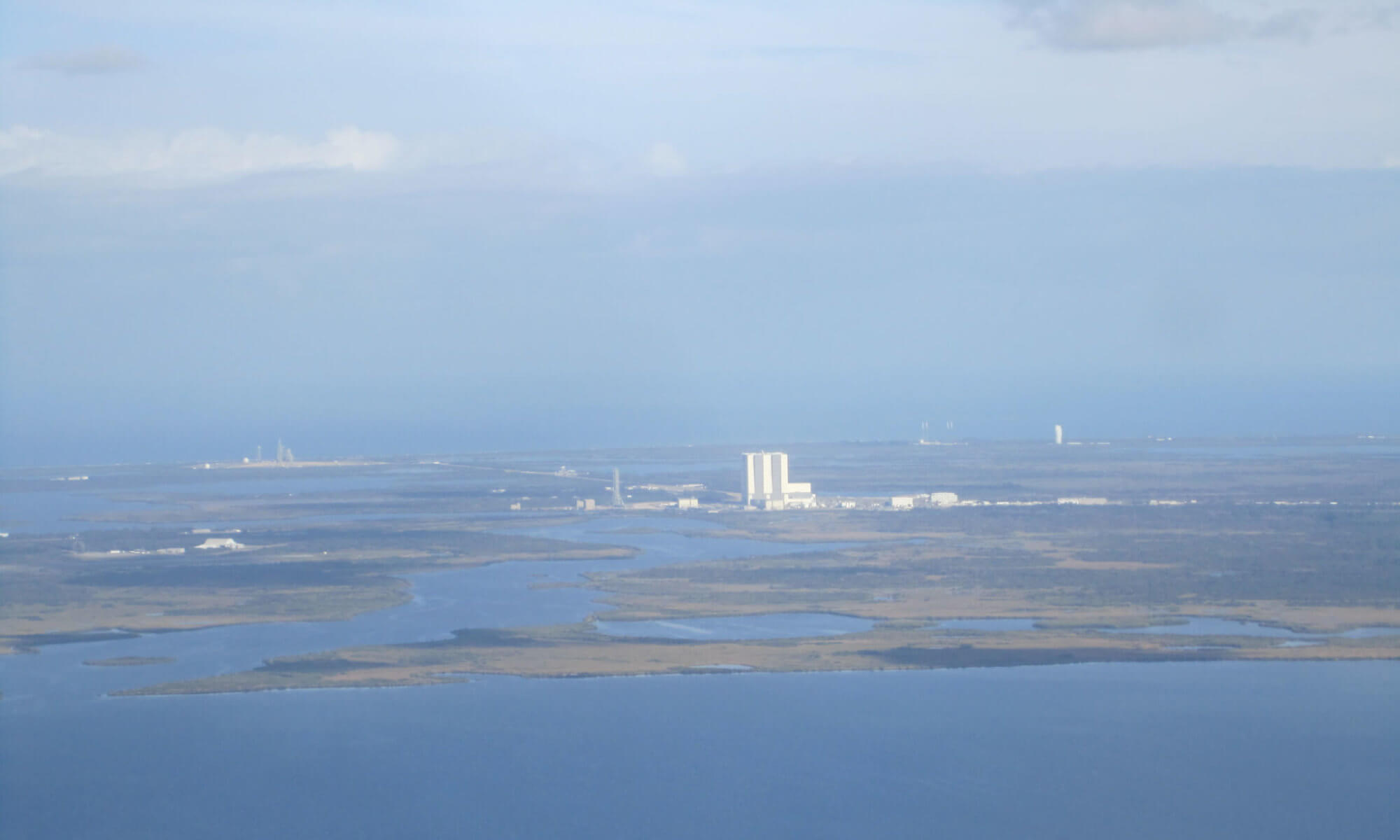
In the beginning of this graphic novel, Kennedy Space Center is shown as a vast squatter camp. Suddenly, the Venture Space Shuttle appears and lands. Apparently, manned spaceflight was abandoned when the Venture disappeared ten years previously.

Ministry of Space – Warren Ellis, Chris Weston & Laura Martin

This graphic novel assumes that the British gained rocketry knowledge after WWII instead of the Americans and Soviets. The British Empire prevails and establishes a substantial space presence. The art is crisp and brings to mind of 1950s space visions. The plot and characters are caricatures of the British. Lots of daring and stiff upper lip. Plenty of fun but it felt a little short.

Some Golden Harbor (RCN V) – David Drake

Lt. Leary, sans ship, is sent to Ganpat’s Reach as an advisor. His mission is to untangle a messy inter-system invasion that threatens the interests of a Cinnabar ally. Conveniently, he can hire his own former ship, the Princess Cecile, and most of the Sissies, to convey him. On arrival, he finds a complex web of intrigue and machinations.

I was rather disappointed by this installment. While it was entertaining enough to keep me going, the plot felt haphazard and overcomplex. The three system polities involved weren’t sufficiently fleshed out, and I was often confused about who did what and to whom. Individual scenes were top notch as usual, but the arc of the plot was muddled.

Robots and Empire – Isaac Asimov

On the “Spacer” planet of Aurora, the woman Gladia’s life is a long succession of days filled with ennnui. Despite being descended from the first humans to settle other planets, her society is stagnating. Spacers live long, empty lives. Robots run all menial work and intricate rules of conduct control much of life. Into this drops D.G. Baley, descendant of Elijah Baley of The Caves of Steel and The Robots of Dawn (when Gladia met Elijah). Baley is a “Settler”, part of a new wave of colonizers from Earth who are much more dynamic than the Spacers, and are overtaking them in influence. The Settlers oppose the Spacers. He asks Gladia to come with him to help investigate a mystery. Meanwhile, powerful men plot the defeat of the Settlers.

This is the last Robot novel by Asimov. It is part of his efforts to unify the Robot series with the Empire/Foundation series. Asimov has great ideas as usual but I found the writing hopelessly tedious. The fact that the Spacers are amazingly annoying people, haughty, self-centered and stuck up, does not help matters. I kept thinking that if I met Gladia I would have wanted to slap her. She is constantly bitching and moaning about trivialities.

As usual with Asimov, there is almost only dialogue and very little actual action. That is not a bad thing per se, but here it has been taken to an absurd extreme. Robot Daneel and Robot Giskard spend page after page discussing events (such as there are) in excruciating detail. No eventuality or possibility is left undiscussed. One character, on two separate occasions, refuses to listen to something he needs to hear until he is convinced that he needs to hear it. Both times it is a 5-10 page ordeal. I know Asimov is trying to make the point that Spacer society is stagnating and is stuck with all these rules, but it makes reading very boring. Overall, that would be the word to describe this novel: boring.

I made it two thirds in before giving up.

The Way to Glory (RCN IV) – David Drake

Leary has finally been promoted, but due to political machinations he is not given a new ship command. Instead, he is assigned as the executive officer of a paranoid Captain whose last move was to violently quash a mutiny by massacring the perpetrators, one of whom was a senator’s son. Leary cannot play humble, and ends up squarely in the sights of his superior.

The series certainly isn’t becoming dull, but I find that Drake missed an opportunity here. The main plot complication in the early part of the book is the contrast and conflict between Leary and Captain Slidell. However, Leary quickly manages to get himself assigned to detached duty, robbing the readers of a whole raft of interesting situations. If you can look past that, this is still a strong book in the series, though not quite as good as those preceding it.

The Far Side of the Stars (RCN III) – David Drake

At the beginning of the third RCN book, Lt. Leary is beached on half pay after peace has broken out between the Republic of Cinnabar and the Alliance of Free Stars. Through an unexpected turn of events, he is able to once again take command of the Princess Cecile, which has been sold out of navy service but is chartered as a yacht by a wealthy foreign couple who want to venture far into the lawless “north”. Their aim is adventure, gambling, big game hunting, but also a search for an elusive relic, the Earth Diamond.

As is now usual with these books, the main plot is not very linear, with many subplots seemingly there to provide amusement and adventure rather than support the main plot. And as is also usual, I didn’t mind at all. Not totally unexpectedly, Lt. Leary finds a way to return to navy service both himself, his crew, and the Princess Cecile. The action is fast, furious and humorous and maintains the high standards of the previous books.

Lt. Leary Commanding (RCN II) – David Drake

After the heroic deeds on Kostroma in With the Lightnings, Leary is unexpectedly permitted to retain command of the captured corvette Princess Cecile. Mundy becomes an intelligence officer for Cinnabar’s elusive spy chief, Mistress Sand. Leary and his crew must catch up with a squadron en route to prevent a rebellion on a vassal planet. Through high level machinations, one of their passengers is the putative heir of the planet’s ruling family.

The main plot is not terribly strong, but it doesn’t matter much. This series is about high-flying adventures, exciting locales and interesting characters, not exact plotting. There is a certain disjointed feeling to the story. For example the incident with the pirates could have been a self contained short story and feels like an excuse to provide some amusing action more than a necessary story element. But as mentioned, all that doesn’t really matter. Revisiting Daniel Leary and Adele Mundy is a treat unto itself.